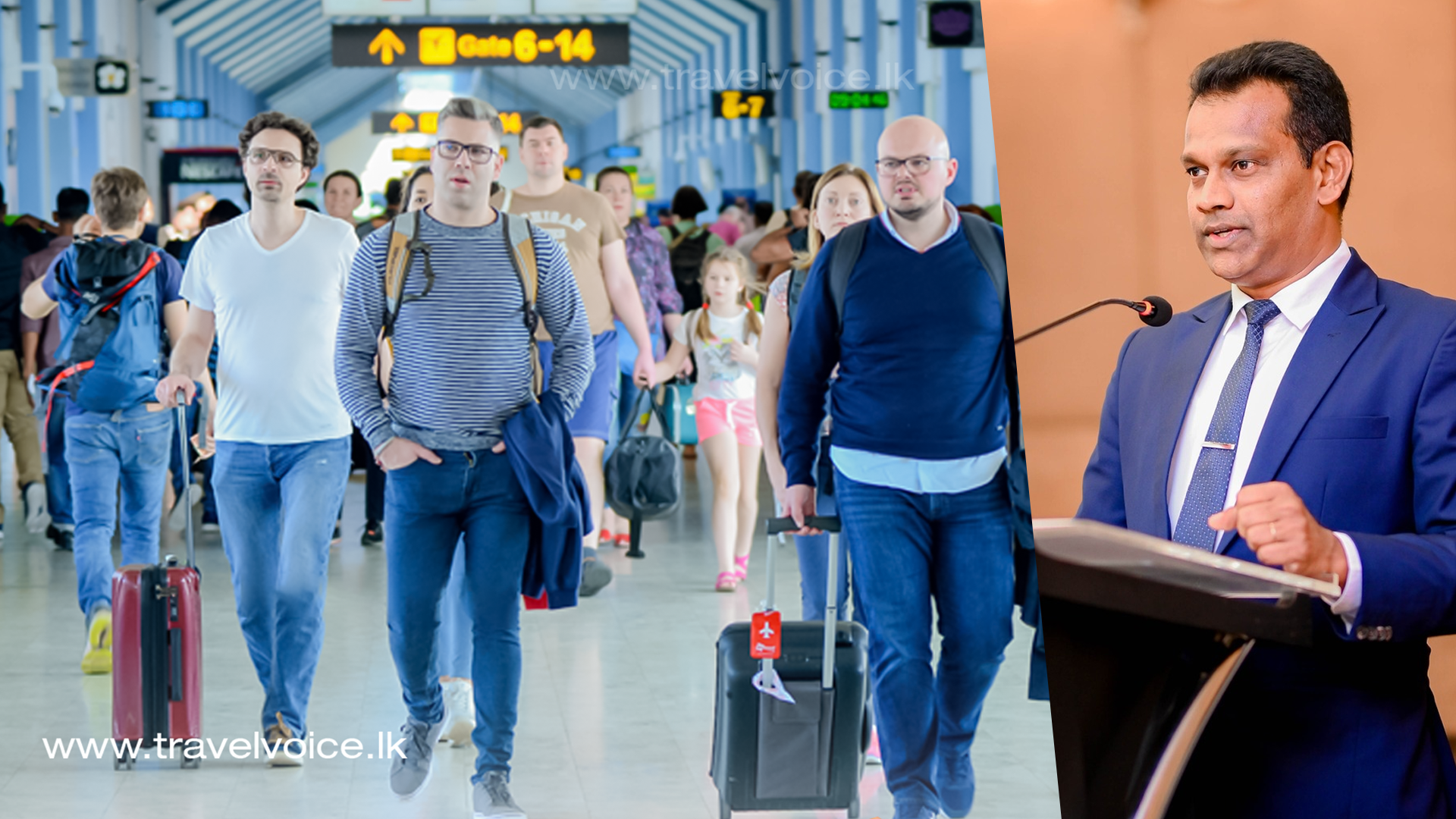
Sri Lanka’s tourism industry remains stable despite escalating tensions in the Middle East, particularly the conflict between Israel and Iran now entering its second week, according to Tourism Deputy Minister Ruwan Ranasinghe.
“There has been no change in arrivals aside from the usual dip experienced at this time of the year,” Ranasinghe stated.
Long-haul flights from the European Union and the UK to destinations in Asia including India, Maldives, Australia, and New Zealand are currently being rerouted through two increasingly narrow air corridors: the northern route over Turkey and the Black Sea, and the southern route over Egypt and Saudi Arabia.
“Industry officials have reported no cancellations in bookings. Anyways, we expect that the arrivals of tourists from the EU, India and China will pick up between July-August. We won’t be revising the tourism target,” he added.
Meanwhile, the United States entered the conflict on Saturday (21) night, launching targeted attacks on Iranian nuclear facilities, which continued for two consecutive days. As a result, US crude oil futures surged to levels last seen in January.
Despite the global developments, Sri Lanka remains optimistic. A capital markets advisory firm recently projected that the country could surpass the 2.3 million tourist arrivals recorded in 2018. The government has set a target of three million tourist arrivals for this year.
From January to April, Sri Lanka earned $1,370 million in tourism revenue, marking a 10.2% year-on-year increase, according to the Central Bank’s External Sector Performance bulletin.
Meanwhile, regional industry reports indicate that Thailand is witnessing a decline in arrivals from the Middle East. Major carriers such as Emirates, Etihad, Qatar Airways, Flydubai, Air Arabia, Oman Air, and SalamAir have all rerouted to avoid conflict-zone airspace.