Sri Lanka’s tourism sector is experiencing an upward trend in tourist arrival numbers, aligning with the need to achieve higher revenue targets and sustainable growth through improved service quality and targeted marketing.
In an interview with The Sunday Morning Business, University of Colombo (UOC) Professor in Tourism Economics Prof. D.A.C. Suranga Silva, who is also the main author of tourism economics handbooks on microtourism economics and macrotourism economics, addressed the key challenges of balancing micro- and macro-level tourism development.
He also stressed the strategic importance of attracting more middle-income tourists going forward, while setting the country up to attract high-spending tourists in the region.
Following are excerpts:
In the Sri Lankan context, to what extent do microtourism and macrotourism contribute to the national tourism economy?
Sri Lankan tourism is clearly recovering with great momentum. However, we must examine its direction and assess whether we are meeting the right objectives for tourism development in the country, addressing the challenges of balancing on-the-ground and big-picture tourism development strategies.
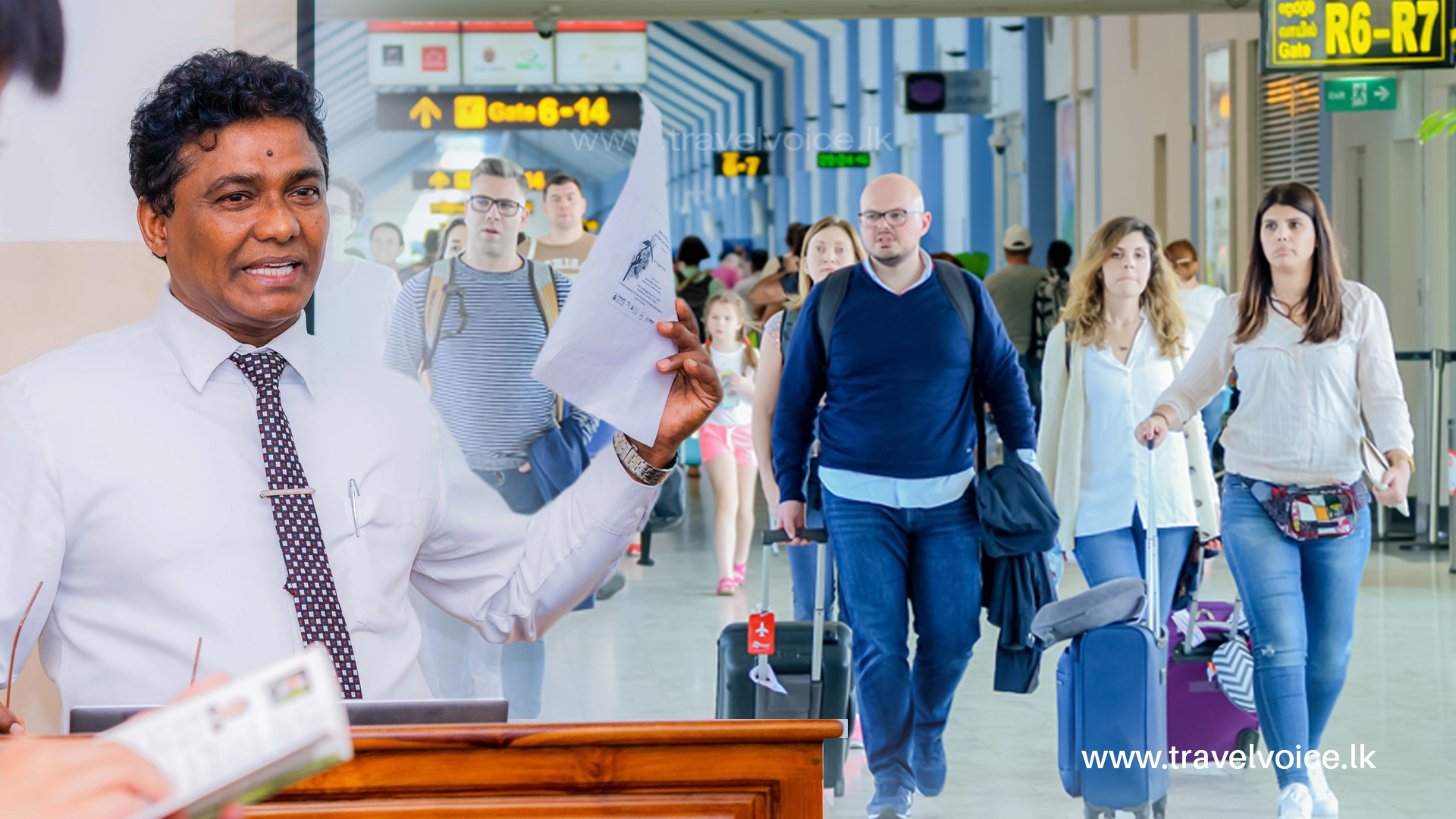
Currently, we can see the tourist arrival numbers greatly increasing. The number of tourist arrivals in Sri Lanka in September 2025 was more than 158,000, a 30.2% increase compared to September 2024, when arrivals were 122,140. The September 2025 arrivals also set a new record, surpassing the previous highest figure for September of 149,087 in 2018.
We have not even started the peak season, which usually begins in mid-November, and growth expands significantly when the season starts. However, while we can be satisfied with the arrival numbers, with an average growth rate of 15–20%, we cannot be as pleased with the tourism income.
Tourism income is not growing as fast as arrivals. The average per-tourist per-day expenditure is around $ 160–175. The Ministry of Tourism aims to increase this average daily spending to $ 200 with ongoing campaigns targeting three million visitors in 2025.
To achieve the goal of $ 3 billion in tourism revenue, the spending per tourist per day must increase to at least $ 200 or $ 250 by targeting high-spending segments like Meetings, Incentives, Conferences, and Exhibitions (MICE) tourism and wellness tourism, as well as luxury resorts-based tourism, which could help increase the average spending per tourist in the coming years.
Moreover, the current expenditure is not very high due to the tourist profile and the activities available. For instance, a considerable number of arrivals are from India and other South Asian countries, whose visitors tend to have shorter stays compared to European visitors. We need to offer more attractive activities to encourage these tourists to spend more.
This pattern is not unique to Sri Lanka, but rather reflects a certain global trend after the pandemic, since at present, many tourists are reluctant to travel to long-distance destinations or engage in long-stay tourism. The average duration of a tourist’s stay in Sri Lanka is now around eight or nine days, down from the previous average of 10 or 11 days.
Therefore, it is necessary to encourage tourists to stay longer by offering activities that create memorable, positive experiences.
In addition to increasing the volume of arrivals, other essential factors include focusing on the revenue generated within the country, the length of stay, the amount of money retained in Sri Lanka, the reduction of industry leakages, and ensuring the fair distribution of income among all contributors who make the industry attractive to international visitors.
At a micro level, how can tourism development in rural or lesser-known areas contribute to inclusive economic growth and community empowerment?
The macro level of Sri Lankan tourism focuses on the bigger picture, which involves measuring the number of arrivals, total spending, length of stay, and visitor demographics. Its impact also directly or indirectly affects the country’s exchange rates and fiscal and monetary policies.
When we shift to the micro level, we are concerned with the benefits generated for locals in different segments and areas of the country. Currently, the majority of tourism activity, including the bulk of hotel rooms, is concentrated in the Western Province. While areas like the south and the Central Province have various attractions, there is a clear inequality in the distribution of tourism development, but this is not due to a lack of resources.
Therefore, we have a shortcoming in regional tourism promotion. The Government is now moving to implement smart, effective strategies to ensure inclusive tourism development in every province by leveraging their comparative and competitive advantages. The aim is to create distinct tourist attractions and experiences across the different provinces.
Micro-level tourism focuses on initiatives such as homestay tourism and community-based tourism, creating different opportunities to facilitate local human and other resource employment. The focus is on generating revenue for local food vendors and guides, retaining money within the community, and creating employment and entrepreneurship in the semi-formal and informal sectors, especially for youth and women.
We must also explore ways to integrate agriculture into the tourism industry, as well as leverage the rural lifestyle itself, which is attractive to many Western tourists seeking authentic experiences. Successful microtourism development strategies can actually minimise even the negatives of urban tourism development as well.
The goal of micro-level tourism is to generate not only more direct income and employment but also to create indirect and induced income and employment opportunities by ensuring inclusive contributions to tourism development in a sustainable manner. However, this requires creating market linkages between rural and urban, mass and small-scale, and microtourism and macrotourism segments.
What mechanisms should be used to ensure that microtourism initiatives are economically sustainable?
We need to identify the barriers preventing micro-level operations from connecting with the macro-level view, which is, fundamentally, a combination of micro-level activities, as these are interconnected layers.
One essential requirement is market linkages, establishing a formal connection between micro-service providers and large operators, and therefore, digital platforms like Online Travel Agencies (OTAs) must be incorporated to facilitate this.
We must also provide financial literacy and knowledge to micro-level operators. This includes training on pricing, cost management, profit reinvestment, and segmenting their market offerings and ensuring tourist satisfaction. Therefore, empowering the Small and Medium-sized Enterprise (SME) sector and people-centric tourism is a fundamental requirement for inclusive tourism.
Several initiatives have been launched to incorporate communities, particularly vulnerable ones. For example, the Sri Lanka Institute of Tourism and Hotel Management (SLITHM) has recently started programmes for vulnerable youth and their families.
In addition to these initiatives, we should adopt a cluster development concept, identifying specific cluster zones with necessary resources available while ensuring environmental protection and sustainability. These clusters also require the development of Destination Management Organisations (DMOs).
At present, connecting micro and macrotourism or formal and informal tourism relies heavily on digital processes. Hence, providing training and support for establishing a strong online booking and marketing presence and utilising social media methods can connect tourism segments better.
Furthermore, we must create macro-level economic policies through integrated and impactful development planning approaches. This means not focusing solely on the tourism industry, but also developing it in conjunction with and with support from other sectors of the economy like agriculture, transport, manufacturing, education, etc.
Investment and product policies are also important. We need to offer incentives to attract Foreign Direct Investment (FDI) for high-value production facilities like eco-lodges and marinas. To strengthen tourism investment, Sri Lanka must first build investor confidence through policy stability and streamlined processes, such as a single window for approvals. Attracting capital requires compelling financial incentives, including tax breaks, eased import duties, and improved access to funding for local and foreign investors.
Product diversification is needed to attract investment, and strategically, investment should be channelled into high-value, sustainable niches like ecotourism, wellness, MICE travel, family tourism, solo tourism, and slow tourism while also developing emerging destinations in the east and north for year-round business.
It is great to see that current tourism strategies focus on recovery, resilience, and sustainable growth. Sri Lanka’s key goals include reaching $ 5–7 billion in foreign exchange earnings by 2030, with the key initiatives including unlocking over 3,000 acres of State-owned land for global tourism investment and launching major infrastructure projects such as the $ 1.2 billion City of Dreams integrated resort in Colombo, which features 800 rooms as well as casino and MICE facilities for attracting high-end tourists.
Such coordinated, multi-stakeholder approaches target positioning Sri Lanka as a high-value, sustainable destination while improving economic benefits. More importantly, positioning Sri Lankan tourism is essential, centring on experience and sustainability. While important, instead of only focusing on infrastructure development, our attention should also be focused on creating authentic, memorable experiences through sustainable tourism practices.
For instance, there is a growing category of senior tourism, increasingly seeking experience-based, spiritual attractions and to experience local cultures. They are often involved in permanent long-stay tourism and have the time and money for high-quality hospitality.
What specific strategies can Sri Lanka adopt to attract high-spending tourists rather than focusing on visitor volume alone?
The question of whether we should only prioritise high-end tourism is an important one. While it may seem beneficial, attracting high-end tourists isn’t simply about inviting wealthy individuals. It requires an overall uplift in the value proposition and facilities.
While promoting high-end tourism is apt, we must acknowledge the difficulty of transitioning from attracting low-end tours, a common pattern in many Asian nations, directly to high-end tourism. This requires structural changes and not just changes in infrastructure and transport facilities, as well as a shift in the attitude of service providers to ensure high quality across the entire journey.
However, we should not focus solely on the highest-end segment, as this may overlook the middle-income tourist, a strong segment in the present context. Middle-income tourists look for value for money, are largely discerning customers, and are concerned with culture and nature, with a considerably high spending power.
Middle-income travellers usually come as families or in groups, and while they appreciate quality, their requirements could be generally less demanding than the highest end. Therefore, we should focus on a transformational movement from low-income to middle-income and eventually to high-income, while promoting all three segments at the same time.
Given regional competition from destinations like Thailand and Vietnam, what strategies could help Sri Lanka better compete for premium markets?
Tourists visiting the Maldives for high-end beach holidays often look for additional experiences, such as wildlife or cultural diversity, which the Maldives does not offer. This is a strategic opportunity for Sri Lanka, where we can focus on attracting the Maldives’ visitors to stay in Sri Lanka for at least one or two days. This strategy could increase the utilisation rate of Colombo City for tourism and better utilise resources in other areas currently underutilised.
The competition with Thailand and Vietnam is more direct, since both offer similar services to Sri Lanka, including a large Buddhist cultural presence and comparable facilities. However, it is problematic if our hotel prices are expensive and transportation fares are uncompetitive, making Thailand and Vietnam more attractive.
We must clearly define our comparative and competitive advantages. A comparative advantage means producing a tourism product better than that of competitors. A competitive advantage means competing effectively by offering a high-quality product at a low cost.
To achieve lower prices, we must ensure low operational costs. This requires reducing unnecessary tax burdens and providing targeted tax incentives and subsidies for investment, particularly for local investors.
Currently, many Sri Lankan investors are reportedly investing their capital in the tourism sectors of Thailand, Vietnam, Indonesia, and the Maldives, indicating that running businesses in Sri Lanka is perceived as highly expensive, a factor that has led to Sri Lanka being labelled an expensive destination.
Our pricing strategies should shift towards value-based pricing rather than cost-plus pricing. This means determining customer willingness to pay and then creating bundled, unique experiences that justify a premium price. Simplifying regulations for both tourist arrivals and investment is also essential.
Finally, aviation strategy must be addressed, as high aviation costs act as a major barrier. The cost of non-essential items and services at the airport is sometimes inflated due to high airport taxes levied on businesses. This is unsustainable for non-essential goods.
If our prices are too high for homogeneous products that competitors offer, tourists will find cheaper substitute destinations. Therefore, if we must charge higher prices, it should be for an exclusive tourism experience or a unique, high-value product.